Author: Lorelle VanFossen

Lorelle VanFossen is a pioneering XR Innovator and WordPress leader, tech educator, keynote speaker, and producer bridging virtual reality and digital innovation. Co-founder of Educators in VR, founding WordPress community member, and passionate advocate for emerging technologies and human rights. Expert in immersive education, VR/XR event production, UX, and digital transformation.

NaNoWriMo Tips: A Reminder – No Editing

The key to NaNoWriMo is the word count. Meeting the goal of 50,000 words. The best way to get there is to not edit, to not fix spellings or grammar, but to just keep the words coming.

There is another good reason not to edit. It is a distraction.

I can’t tell you how many times I’ve had the wavy red line under a word and I’ve paused to fix it – after all, it’s just a right click and select the right word – and lost my train of thought. It can happen that fast.

The mistakes will still be there when you come back to edit. Just keep writing. The world will not come to an end because you mizpelled a word or messed up a tense. Keep going. You’re almost done. Stay on pace, stay on track, you can do it.

Note: According to Chris Baty, founder of NaNoWriMo and author of many books including No Plot? No Problem! Revised and Expanded Edition: A Low-stress, High-velocity Guide to Writing a Novel in 30 Days, a good proportion of NaNoWriMo participants use procrastination to stall until the last four to six days of the month, then throw themselves into a frenzy to complete the 50K word count competition on overdrive. Even if you have been slacking, it is possible to write more than 10K words a day, if you stop editing and get out of your own way.

You can find more writing tips, NaNoWriMo prompts, and writing tips for NaNoWriMo on our Writers in the Grove site.

November 27 Prompt – The Letter

The following prompt is from one of our Writers in the Grove members for our NaNoWriMo prompt-a-day project for November 2016.

How about a tribute to the Postal Service?

The envelope in the mailbox was to the wrong address, but the return address caught her attention.

Check out our list of prompts for even more inspiration.

NaNoWriMo Tips: Point of View

NaNoWriMo isn’t about writing just one thing. It is also a time for experimentation, which can also spice up the chore of your 1,667 words a day. Try experimenting with point of view.

Write a scene told from the perspective of the main character, written in third person.

Write the scene as told from the perspective of an omnipotent narrator.

Write the scene as told from the perspective of one of the other characters.

Write the scene as told from the perspective of one of the animals nearby, a bird, cat, dog, snake.

Write the scene in first person.

Which works better? Should you change your story’s point of view? Or keep it? Either way, it mixes things up for a writing session, and helps you see your story from another perspective.

You can find more writing tips, NaNoWriMo prompts, and writing tips for NaNoWriMo on our Writers in the Grove site.

November 26 Prompt – The Magnifying Glass

The following prompt is from one of our Writers in the Grove members for our NaNoWriMo prompt-a-day project for November 2016.

A little mystery prompt?

She picked up the large, gold magnifying glass from the desk.

Check out our list of prompts for even more inspiration.

NaNoWriMo Tips: Where are Your Cliffhangers?

Cliffhanger movie 1993 screencap of man falling from landslide on cliffHave you included some cliffhangers in your story? Cliffhangers are the moments in a movie or television show when there is a cut-away from the action, often for a commercial, and the viewer is left hanging, anxious about what will happen to the hero.
Cliffhangers are common writing devices, but they work. In a novel, these are found between scenes and chapters, but also between paragraphs, pulling the reader through the story to find out what happens next.

Where are your cliffhangers? Are they critical plot points or have you thrown in a few throughout the story to keep the reader on edge, eagerly turning page after page?

If you don’t have any, start adding them. Write them in. They add tension, conflict, and drag the reader through the story.

The key to a good cliffhanger is how it draws the reader into the story. They are a part of the action. They want to know what happens. A successful cliffhanger is one written to make the reader a part of the story, so they feel like they are the ones pushing or chasing the story forward.

You can find more writing tips, NaNoWriMo prompts, and writing tips for NaNoWriMo on our Writers in the Grove site.

November 25 Prompt – A Little Chill

The following prompt is from one of our Writers in the Grove members for our NaNoWriMo prompt-a-day project for November 2016.

Time for a weather prompt.

The chill outside crept through her skin like it came from her bones.

Check out our list of prompts for even more inspiration.

NaNoWriMo Tips: Play with Time

Writers can make a moment last pages, even a whole chapter. Or they can make a sentence last a week.

As you work on your novel and stories, consider how you use time. Stretch it to make a moment last, compress it to add tension or skip the story ahead.

Consider adding a race against time element to your story. The clock is ticking and your hero has only so much time to accomplish the task and save everyone.

The groundbreaking television show 24 told the story in real-time, so to speak. Each hour increment in a 24 hour period represented 60 minutes of the story line. They even used a clock to help track the hour during each episode. It was an exciting story device that kept the viewer on the edge of their seat as the drama raced forward.

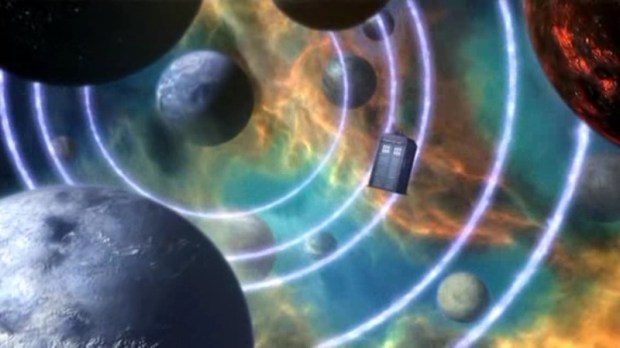
Doctor Who - the Stolen Earth screencap.

In Doctor Who, the Doctor and his companions and the other characters in the stories can shift between time within a few seconds not just on this planet, but across multiple planets and galaxies. In the finales of Season 4, the time traveling machine called the Tardis was controlled to dial through time, allowing the Doctor and Donna to watch an event that could take thousands or millions of years to complete, helping the viewer experience it with them, adding drama to the story line. In the book and BBC show, Johnny and the Bomb by Terry Pratchett, young kids discover a woman who can travel through time with a shopping cart, and go back and forth to World War II to prevent a bomb from exploding in their 1990s time period. Creative manipulation of time lines in stories is found everywhere, helping not only add drama, but to also help the reader understand what’s going on.

As you write, ensure the reader is with you on the passage of time. Do they track that it has been minutes or years between scenes? How have you made that clear?

It’s challenging to keep a reader on track with your creative manipulations of time. Flashbacks, backstory, dream sequences, future thoughts, movements of time between scenes…work it carefully, dragging the reader through the space time continuum.

Help them keep up with the time and the pace of your story, but have fun with how you use time.

You can find more writing tips, NaNoWriMo prompts, and writing tips for NaNoWriMo on our Writers in the Grove site.

NaNoWriMo Tips: How Many Ways to Write a Scene

A novel is a collection of scenes, held together by chapters. During NaNoWriMo, you will write dozens of scenes, each one adding to the plot, taking the reader, and your characters, on a journey.

Think about a single scene. How many ways can you write it?

Let’s set the stage. A woman is sitting in her car in rush hour traffic, going nowhere. The man in the car next to her turns his head and looks at her.

How many ways can we tell this story?

  • From the perspective of the woman?
  • From the perspective of the man?
  • From onlookers watching the two from their cars?
  • What if it is hot out and their windows are open?
  • What if it is cold and they have to wipe the condensation from the window to even see each other?
  • What if one of their cars has smoke or steam coming out from under the hood?
  • What if one has a coffee cup or a lunch bag on the roof of their vehicle?
  • What if one vehicle has a low tire?
  • What if one of the car is an expensive luxury car and the other isn’t?
  • What if one of them is poor and just evicted from their home and their car is their only safe place?
  • What if they know each other?
  • What if they knew each other as teenagers?
  • What if they are married?
  • What if they were married and just drove away from the lawyers office after signing the divorce papers, and each are the last person they want to see?
  • What if there is a dog in one car?
  • What if one of them is depressed?
  • What if one of them just got a raise and is overexcited?
  • What if one really likes the look of the other?

We could go on and on with all of the perspectives, points of view, and what ifs.

What if the scene is critical to the story, and you don’t want to go off on a bunch of wild “what if” theories. How could you tell the story differently and keep the story line the same?

  • What is the emotional state of the characters? Can you change one or both of them?
  • What is around them that they have to or might interact with? A gear shift? Squeaking brakes? The steering wheel? How would they handle it?
  • Use your senses. What do they smell, feel, temperature, body pains, body positions, hear, see? Which details add or subtract from the scene?
  • What if you threw another character into the mix? A person pops up in the backseat or someone honks behind them? How will each character respond?
  • Can you show the scene from the perspective of a memory?
  • What if they are anticipating seeing each other in traffic and it hasn’t happened?

Other than changing the location, time, and weather, brainstorm all the different ways you could write the scene and then pick from these when it is time to edit – in December.

You can find more writing tips, NaNoWriMo prompts, and writing tips for NaNoWriMo on our Writers in the Grove site.