Author: Lorelle VanFossen

Lorelle VanFossen is a pioneering XR Innovator and WordPress leader, tech educator, keynote speaker, and producer bridging virtual reality and digital innovation. Co-founder of Educators in VR, founding WordPress community member, and passionate advocate for emerging technologies and human rights. Expert in immersive education, VR/XR event production, UX, and digital transformation.

NaNoWriMo Tips: Avoid Punctuation Police

Here is a lesson in creative writing. First rule: Do not use semicolons. They are transvestite hermaphrodites representing absolutely nothing. All they do is show you’ve been to college.
Kurt Vonnegut

This is wise advice, especially during NaNoWriMo. Don’t let the punctuation get in your way. Fussing over a comma, period, quote mark, colon, and semi-colon as you hammer out your story slows you down.

Fix all the punctuation in December. Then you can learn all about the rules and regulations of English punctuation and use it right.

You can find more writing tips, NaNoWriMo prompts, and writing tips for NaNoWriMo on our Writers in the Grove site.

November 6 Prompt – Favorite Food

The following prompt is from one of our Writers in the Grove members for our NaNoWriMo prompt-a-day project for November 2016.

Your prompt today is a favorite food.

It could be the favorite food of yours, or one or more of your characters.

Check out our list of prompts for even more inspiration.

NaNoWriMo Tips: Write Your Draft Fast

Get through a draft as quickly as possible. Hard to know the shape of the thing until you have a draft. Literally, when I wrote the last page of my first draft of Lincoln’s Melancholy I thought, Oh, shit, now I get the shape of this. But I had wasted years, literally years, writing and re-writing the first third to first half. The old writer’s rule applies: Have the courage to write badly.
Joshua Wolf Shenk

You can find more writing tips, NaNoWriMo prompts, and writing tips for NaNoWriMo on our Writers in the Grove site.

November 5 Prompt – Friends

The following prompt is from one of our Writers in the Grove members for our NaNoWriMo prompt-a-day project for November 2016.

The prompt today is friends.

Does your character(s) have friends? Who are they? What is the relationship like? Or possibly write about what it means for your character to be a friend.

Check out our list of prompts for even more inspiration.

NaNoWriMo Tips: My Favorite Things

Do you remember the song “My Favorite Things” from The Sound of Music?

Raindrops on roses
And whiskers on kittens
Bright copper kettles
And warm woolen mittens
Brown paper packages tied up with strings
These are a few of my favorite things

Cream colored ponies
And crisp apple strudels
Door bells and sleigh bells
And schnitzel with noodles
Wild geese that fly with the moon on their wings
These are a few of my favorite things

Try this writing experiment:

  1. Number a piece of paper from 1 – 25.
  2. Set the timer for 6 minutes.
  3. Now, make a list of your favorite things – exclude spouse and children.

When done with the list, look at which of the five senses are predominant. Taste of food? Smell of weather?

Be aware of how you remember things, and incorporate those descriptions into your writing, remembering to expand your favorite things to include all the senses, too.

You can find more writing tips, NaNoWriMo prompts, and writing tips for NaNoWriMo on our Writers in the Grove site.

NaNoWriMo Tips: Writing Sessions

Writing 1,667 words generally takes 60-90 minutes depending upon how fast you type. If you are hand-writing, it may take even longer, but not much.

Do you need to sit down and write for the full 90 minutes?

No.

Consider splitting up your writing session times into two or more sessions throughout the day. Thirty minutes three times a day still gets the job done if you prepare yourself well.

NaNoWriMo fan and author, Ysenia Vargas offers the following advice:

Basically, for every hour of the day, from the time you wake up until the time you go to bed, you are responsible for writing 500 words an hour. After writing 500 words for that hour, you can do whatever you want until the next hour begins.

You can find more writing tips and prompts and tips for NaNoWriMo on our Writers in the Grove site.

November 3 Prompt – The Sniff Memory

The following prompt is from one of our Writers in the Grove members for our NaNoWriMo prompt-a-day project for November 2016.

Your prompt today could be done from your perspective or the perspective of your character(s).

When I smell [blank], I remember [blank].

Start filling in those blanks.

Check out our list of prompts for even more inspiration.

What Can You Copyright and Trademark (and Not)

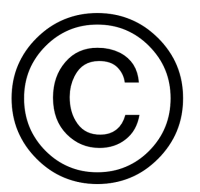
Copyright Symbol.In response to “Understanding Publishing Rights,” several writers have asked us to be a little more definitive about what you can and cannot copyright and trademark. While a full discussion of this is beyond the scope of this site and our group, Writers in the Grove, we’ve broken down some of the details pertinent to writers.

Copyright law protects what are called works of authorship. These include all forms of literary work including books, magazines, scripts, manuals, brochures, sound recordings, video, etc. These are referred to as intellectual property.

Trademark SymbolTrademark laws protect word(s), phrases, symbols, designs, or a combination of these to distinguish the source of a product, goods, or services from others. You cannot trademark a book, but you may trademark a series of books such as “Nancy Drew” or “The Hardy Boys” as a brand. If the series has a logo, artwork that designates the branding of the work, that may be trademarked, like the Chicken Soup series. If your work includes the concept or creation of a unique item such as the game “Quidditch” in Harry Potter books, this maybe trademarked to protect the words and phrases.

Copyright law does not protect ideas, inventions, facts, words, names, symbols, processes, systems of operations, and other proprietary information, though these could be protected under other laws such as inventions and processes protected under patent law, and some words, names, symbols, etc., may be protected under trademark law. Proprietary information is sometimes protected by trade secret laws.

You may copyright any original artistic work. It may be completely original, or a collage or compilation that makes it “new” and unique. These are known as derivative works. Some derivative works require permission of the copyright holders if the usage goes beyond their copyright license and permissions for fair use and compilation specifications.

There is an international body of law that protects copyrighted work, but on the web, it is necessary to be very specific about your license and permissions for usage. For example, it is well within your rights to make your copyrighted work set to public domain. This means you are giving it away for free and you release all rights to the work for whatever usage anyone may wish to do with your work. That is your choice, and one of the different copyright licenses you may choose. Or not. You may choose to have a stricter license for usage of your work. Thus, on the web as well as in other published works, don’t let the reader/user assume your copyright policy. Be specific about what rights you offer for usage of your work for excerpts and fair use, if any.

Copyright Fair Use is part of copyright law that permits the “fair use” of copyright content to avoid copyright infringement, the illegal use of the content. Fair use includes quotes, excerpts, and pictures of the work, such as a picture of the book jacket for a review article. In general, copyright fair use states that a portion of the work maybe used as long as it does not infringe upon the copyright holder’s rights and ability to license their work. It’s a fine line, so when you can, be specific with what you will and will not allow as fair use of your work. “Fair Use and Copyright and What Every Writer, Self-Publisher and Blogger Ought to Know” by The Book Designer has some excellent scenarios to walk you through fair use examples.

There is also a form of Trademark Fair Use that permits usage of the trademarked item as a guarantee of the First Amendment of the United States and may not apply outside of the country. Generally, the usage of a trademark within fair use allows the use of the term, slogan, or logo within the proper context of the work and without insult, defamation, libel, slander, or harm to the reputation of the company. According to legal experts, the usage would rely upon the trademark owner’s “goodwill and reputation” for allowing such use.

You do not have to register your work as it is considered copyrighted the moment it is “fixed in tangible form.” If you choose to protect that copyright through legal action, you are required to register the work with the copyright offices.

For the writer, let’s be specific with what you can and cannot trademark. (more…)

NaNoWriMo Tips: Locations

Where does your story take place? Does it happen in one place or many places?

Take time in NaNoWriMo to write extensive descriptions of each location in each scene in your story. In the editing phase, you might only use a small part of this, but by exploring the surrounds around your characters fully, you have a wealth of information to choose from.

It’s difficult to write about a place you’ve never experienced, though science fiction and fantasy authors do it all the time. If you are new to writing, write about a location you are familiar with, one you know well. You can always change or rename the location later during the editing stage.

Consider the following as you describe each location:

  • Where are they?
  • When are they? What time of day? What year? What month? Which day of the week?
  • Describe the ground.
  • Describe the building(s) outside.
  • Describe the building(s) inside.
  • What is the most predominate color?
  • What do you smell? One thing or many things? Which is dominant? Which is a hint of fragrance?
  • What are the sounds? Are there many or few? Which is loudest, drowning the rest? Which is softest, heard only when paying attention or in a moment of silence from the rest of the sounds?
  • What is the temperature?
  • Is it dry, humid, wet, damp, windy, hot, cold?
  • What does the character(s) feel on their skin? Is the sensation the same on top of the head as well as the feet?
  • Where is the sun? Can it be seen?
  • Describe textures, of walls, ceilings, furniture, floor, plants.
  • Is nature here? What kind of nature? What is it, what does it look like?
  • Does anything in the scene trigger stereotype reactions?
  • Does anything in the scene trigger an emotional or memory response to one or more characters?
  • Are there doors, paths, or exits?
  • Are there windows? Open, closed? What is visible through them?
  • Does the space feel open or closed, restricted, or free?
  • Are there landmarks, statues, artwork, elements that serve as markers or direction indicators?
  • Which way are the characters facing? North, east, west, south, etc.
  • Is the sun/moon in their face or behind them? Or not anywhere?
  • Are their vehicles? Furniture? What man made objects are near them? Do they interact with them?
  • Find one element in the scene and describe it. Is it important to the scene, or an accessory? Does it help the story or help define the characters?
  • Find another element, one that might be missed. Describe it. Why is it there?

This should start a series of your own questions specific to the location. Write those down and create your own list.

You can find more writing tips and prompts and tips for NaNoWriMo on our Writers in the Grove site.